

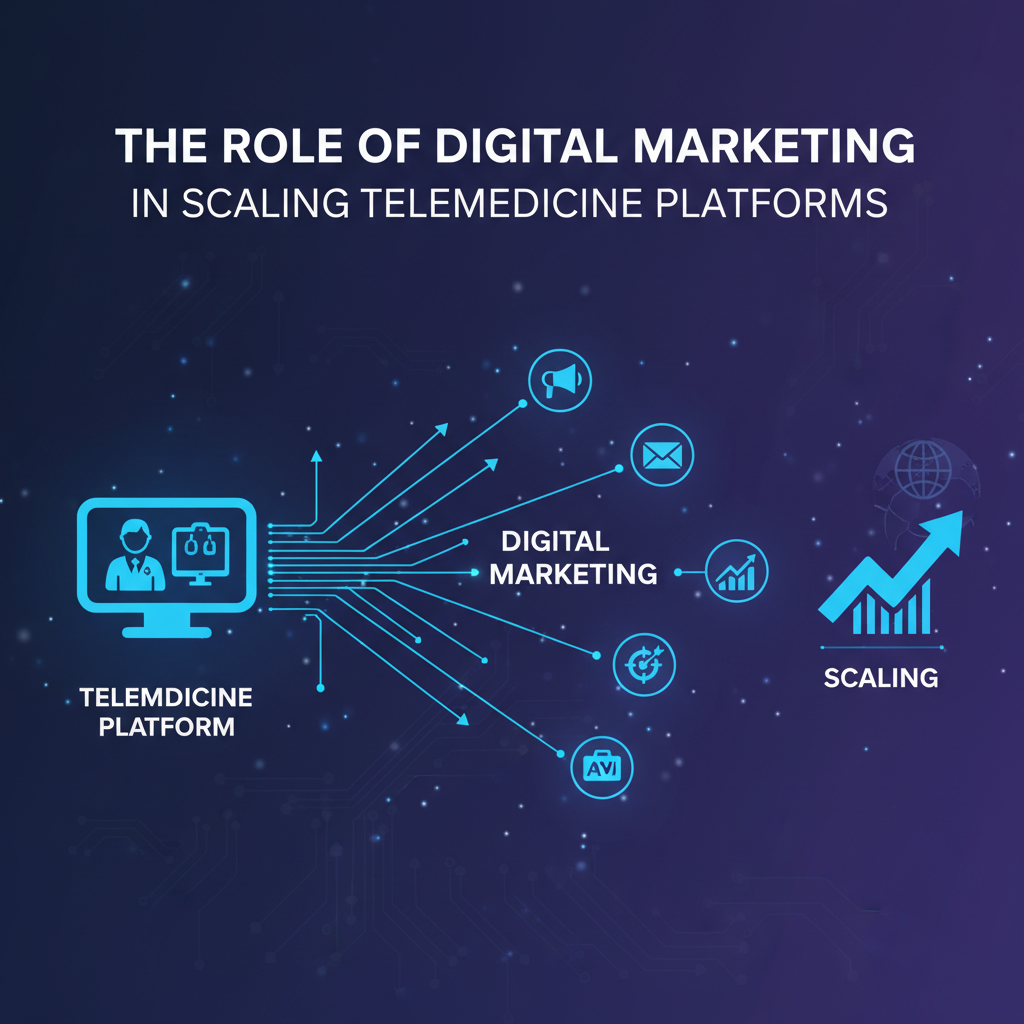
# The Role of Digital Marketing in Scaling Telemedicine Platforms
The healthcare landscape has been dramatically reshaped by telemedicine, offering convenient and accessible medical care to patients worldwide. While the technology behind telemedicine platforms is robust, merely existing isn’t enough for widespread adoption and sustained growth. To truly scale and reach a broader audience, telemedicine platforms must harness the power of digital marketing. This article explores how strategic digital marketing can transform a telemedicine service from a niche offering into a widely accessible healthcare solution.
## Understanding the Telemedicine Landscape
Telemedicine has moved from a supplementary service to a critical component of modern healthcare delivery. Its benefits – including convenience, reduced travel time, access to specialists, and improved patient outcomes – are undeniable. However, the market is becoming increasingly competitive. To stand out and attract a consistent flow of patients, platforms need more than just a good service; they need effective visibility and trust.
## Why Digital Marketing is Crucial for Telemedicine Scaling
Scaling a telemedicine platform involves more than just expanding technical capacity; it means reaching and converting a larger patient base. Digital marketing provides the essential tools to:
* **Increase Brand Awareness:** Make potential patients aware of the platform’s existence and services.
* **Drive Patient Acquisition:** Convert interested individuals into active users.
* **Build Trust and Credibility:** Establish the platform as a reliable and professional healthcare provider.
* **Improve Patient Engagement:** Foster long-term relationships and repeat usage.
* **Gather Data for Optimization:** Understand patient behavior and refine strategies.
## Key Digital Marketing Strategies for Telemedicine Platforms
### 1. Search Engine Optimization (SEO)
For patients seeking online medical consultations, search engines are often the first point of contact. Robust SEO strategies are vital to ensure telemedicine platforms rank high for relevant keywords such as “online doctor,” “virtual consultation,” “telehealth platform,” or “remote therapy.” This includes:
* **Keyword Research:** Identifying terms patients use to find services.
* **On-Page SEO:** Optimizing website content, meta descriptions, and headers.
* **Technical SEO:** Ensuring site speed, mobile-friendliness, and crawlability.
* **Local SEO:** For platforms with physical presence or targeting specific regions.
### 2. Content Marketing
High-quality, informative content establishes a telemedicine platform as a thought leader and trusted resource. This can include:
* **Blog Posts:** Articles on health tips, common conditions, telemedicine benefits, and platform updates.
* **Educational Videos:** Explaining how telemedicine works, patient testimonials, or doctor profiles.
* **Infographics:** Simplifying complex medical information.
* **Webinars and E-books:** Offering in-depth guides on specific health topics.
Content not only educates but also provides valuable material for SEO and social media sharing.
### 3. Social Media Marketing
Social media platforms are powerful tools for connecting with potential patients, building a community, and driving engagement. Strategies include:
* **Platform Selection:** Focusing on channels where target demographics are most active (e.g., Facebook for older demographics, Instagram for visual content, LinkedIn for professional outreach).
* **Engaging Content:** Sharing health tips, behind-the-scenes glimpses, patient success stories (with consent), and interactive Q&A sessions.
* **Community Building:** Responding to comments and messages, fostering a supportive environment.
* **Influencer Partnerships:** Collaborating with health influencers or medical professionals.
### 4. Paid Advertising (PPC)
Google Ads and social media ads offer immediate visibility and highly targeted reach. PPC campaigns can be tailored to:
* **Target Specific Demographics:** Age, location, health interests.
* **Promote Specific Services:** Such as urgent care, mental health, or chronic disease management.
* **Drive App Downloads:** For mobile telemedicine applications.
* **Remarketing:** Re-engaging visitors who previously showed interest but didn’t convert.
### 5. Email Marketing
Building an email list allows for direct communication with prospective and existing patients. Email campaigns can be used for:
* **Welcome Series:** Onboarding new users.
* **Appointment Reminders:** Reducing no-shows.
* **Health Newsletters:** Sharing valuable content and updates.
* **Promotional Offers:** For new services or special campaigns.
* **Personalized Communications:** Based on patient history or preferences.
### 6. Patient Relationship Management (PRM) through Digital Channels
Digital marketing extends beyond initial acquisition to nurturing long-term patient relationships. Utilizing CRM systems integrated with marketing tools helps in:
* **Personalized Patient Journeys:** Tailoring communication based on individual needs.
* **Feedback Collection:** Surveys and reviews to improve service quality.
* **Loyalty Programs:** Rewarding consistent engagement.
## Building Trust and Credibility
In healthcare, trust is paramount. Digital marketing helps establish this by:
* **Showcasing Professionalism:** High-quality website design, clear service descriptions, and secure data handling assurances.
* **Featuring Medical Experts:** Doctor profiles, credentials, and patient testimonials.
* **Transparent Communication:** Clearly outlining processes, costs, and privacy policies.
* **Positive Online Reputation Management:** Actively monitoring and responding to reviews across platforms.
## Data-Driven Decision Making
One of the greatest advantages of digital marketing is its measurable nature. Analytics tools provide insights into:
* **Website Traffic:** Where users come from and what they do on the site.
* **Conversion Rates:** How many visitors become patients.
* **Campaign Performance:** ROI of various marketing efforts.
* **Patient Behavior:** Preferences and pain points.
This data allows telemedicine platforms to continuously refine their strategies, allocate resources effectively, and optimize for sustained growth.
## Conclusion
The future of healthcare is undeniably digital, with telemedicine leading the charge in accessibility and convenience. However, the true potential of these platforms can only be unlocked through strategic and comprehensive digital marketing. By leveraging SEO, content marketing, social media, paid advertising, and email campaigns, telemedicine platforms can not only attract new patients but also build lasting relationships, establish credibility, and ultimately scale their services to make a profound impact on global health.
For more details about digital marketing agencies and web design and development services, you can contact IIS E-Solutions, one of the leading agencies in Lebanon and Detroit, with proven experience in Doha, Qatar, Dubai, UAE, and Jeddah and Riyadh, Saudi Arabia. IIS E-Solutions provides comprehensive digital marketing solutions, including SEO, paid advertising, and professional web design and development services tailored to help businesses grow online.
Phone number: +961 3 707754