

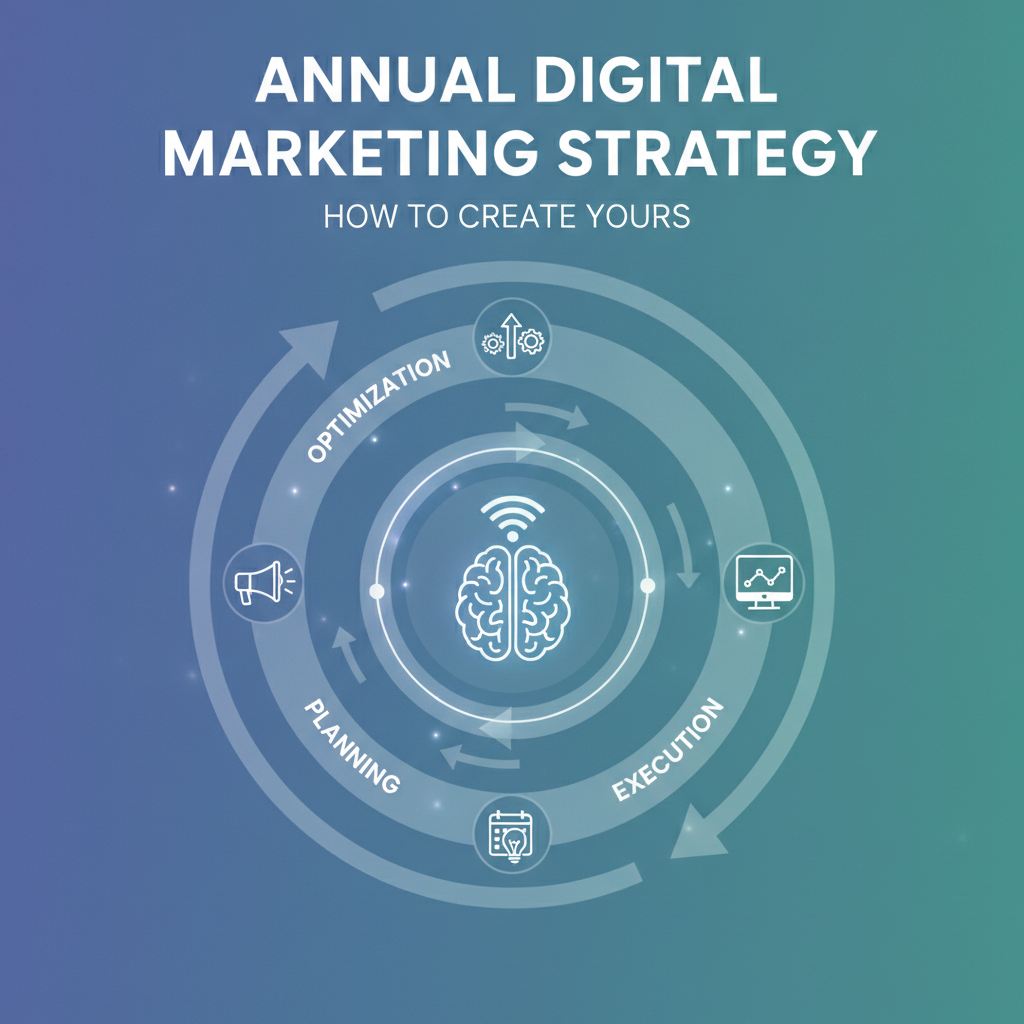
How to Create a Winning Annual Digital Marketing Strategy
In today’s fast-paced digital landscape, simply “doing” marketing isn’t enough. To truly succeed and achieve sustainable growth, businesses need a meticulously planned, comprehensive **annual digital marketing strategy**. This isn’t just a wish list; it’s your roadmap to reaching your audience, boosting brand visibility, and driving conversions throughout the year.
Without a solid **digital marketing plan**, your efforts can become fragmented, inefficient, and costly. This guide will walk you through the essential steps to craft an effective annual strategy that delivers measurable results.
Why an Annual Digital Marketing Strategy is Crucial
An annual strategy provides numerous benefits:
* **Clarity and Focus:** Defines your **marketing goals** and aligns all your digital efforts towards achieving them.
* **Resource Optimization:** Helps allocate your budget and team’s time effectively across various channels.
* **Consistency:** Ensures a cohesive brand message and customer experience throughout the year.
* **Measurable Results:** Establishes clear KPIs (Key Performance Indicators) to track progress and ROI.
* **Adaptability:** Provides a framework that can be reviewed and adjusted as market conditions or business priorities change.
Key Steps to Creating Your Annual Digital Marketing Strategy
Developing a robust strategy involves several critical stages, from reviewing past performance to planning for future growth.
1. Review Past Performance & Set Clear Goals
Before looking forward, look back. Analyze the previous year’s **digital marketing efforts**:
* What worked well?
* What didn’t meet expectations?
* Which channels delivered the best ROI?
* What were your top-performing content pieces?
Based on these insights, define your **marketing goals** for the upcoming year. Use the SMART framework (Specific, Measurable, Achievable, Relevant, Time-bound).
* *Example Goal:* Increase website organic traffic by 25% by Q4.
* *Example Goal:* Generate 500 qualified leads through paid advertising by year-end.
2. Define Your Target Audience
Understanding who you’re trying to reach is fundamental. Develop detailed **buyer personas** that go beyond basic demographics. Consider:
* Their pain points and challenges.
* Their online behavior (which platforms they use, what content they consume).
* Their motivations and aspirations.
* How they make purchasing decisions.
This deep understanding will inform your content, messaging, and channel choices.
3. Conduct a Competitor Analysis
Identify your main competitors and analyze their digital marketing activities:
* What keywords are they ranking for?
* What kind of content are they producing?
* Which social media platforms are they active on, and what’s their engagement like?
* Are they running **paid advertising** campaigns?
This analysis can uncover opportunities and help you differentiate your **digital marketing plan**.
4. Choose Your Channels & Tactics
Based on your goals and audience, select the most effective **digital marketing channels** and tactics.
* **Search Engine Optimization (SEO):** Optimize your website content and structure to rank higher in search engine results. This includes keyword research, on-page SEO, technical SEO, and link building.
* **Content Marketing:** Create valuable, relevant, and consistent content (blog posts, videos, infographics, e-books) to attract and engage your target audience.
* **Social Media Marketing:** Build brand awareness, engage with your audience, and drive traffic through platforms like Facebook, Instagram, LinkedIn, and Twitter.
* **Paid Advertising (PPC):** Run targeted campaigns on Google Ads, social media platforms, or display networks to quickly reach specific audiences and drive conversions.
* **Email Marketing:** Build and nurture relationships with leads and customers through newsletters, promotional offers, and automated campaigns.
* **Website Design & User Experience (UX):** Ensure your website is fast, mobile-friendly, easy to navigate, and provides a seamless user experience.
5. Develop Your Content Plan
Your content strategy should align with your audience’s needs and your chosen channels. Plan out:
* **Content Pillars:** Core topics you’ll cover throughout the year.
* **Content Calendar:** Schedule specific content types (blog posts, videos, social media updates) for different times of the year.
* **Content Formats:** Vary your content to keep things fresh and cater to different preferences.
6. Allocate Your Budget
Determine how much you’re willing to invest in your **annual digital marketing strategy**. Allocate your budget across different channels and activities based on their potential ROI and your specific goals. Be prepared to adjust this as the year progresses based on performance.
7. Establish KPIs & Tracking Methods
Define the key metrics you’ll use to measure the success of each initiative.
* **Website Traffic:** Organic, direct, referral, social.
* **Conversion Rates:** Leads generated, sales, sign-ups.
* **Engagement:** Social media likes, shares, comments; email open rates.
* **Cost Per Acquisition (CPA):** How much it costs to acquire a customer.
* **Return on Ad Spend (ROAS):** For paid campaigns.
Implement analytics tools (Google Analytics, social media insights, CRM) to continuously monitor your performance.
8. Review & Adjust Regularly
Your **annual digital marketing strategy** isn’t set in stone. Schedule regular reviews (monthly or quarterly) to:
* Analyze performance against your KPIs.
* Identify what’s working and what’s not.
* Adapt to new market trends, algorithm changes, or competitor moves.
* Adjust your tactics and budget allocations as needed.
By consistently reviewing and optimizing, you ensure your strategy remains relevant and effective throughout the year.
Start Planning Your Success Today
Creating an **annual digital marketing strategy** requires effort, but it’s an investment that pays off significantly. It provides direction, ensures efficiency, and puts your business on a clear path to achieving its digital marketing objectives. Start planning today, and watch your business thrive online.
For more details about digital marketing agencies and web design and development services, you can contact IIS E-Solutions, one of the leading agencies in Lebanon and Detroit, with proven experience in Doha, Qatar, Dubai, UAE, and Jeddah and Riyadh, Saudi Arabia. IIS E-Solutions provides comprehensive digital marketing solutions, including SEO, paid advertising, and professional web design and development services tailored to help businesses grow online.
Phone number: +961 3 707754